6 May 2012
hello, sunshine
monday
Last night was really so wonderful, and I wake up smiling. What’s more, I’m breathing freely – the Elixir works! It’s a gray morning but the sun soon comes out, and it’s glorious, really beautiful. We had been planning on shooting at the Abbey before the tourists showed up at 10:30, but first I want to make sure Malin and Matt really have the process down. It’s mostly just little procedural things now – how much chemistry to lay down, how hard to brush, how long to wait… And of course our last few comet gremlins. It seems a good moment to go over everything once more, and to consolidate all that we’ve learned here.
One thing I learned from last night is how much heat affects our negatives… In my experience with wet Calotypes, heat is bad before exposure, but good for development. However, I’ve decided it’s causing the bulk of our comet problem. There’s one of the three coating stations in the darkroom which has a heater at the baseboard right under it. This has been mostly great for us. It’s kept the darkroom dry in all this wet weather (and warm after shivering in the Abbey) and allowed us to have dry paper to use pretty quickly after iodizing. However, whether it’s from heat and static drawing dust to the paper (or Mylar) or just some spontaneous development, it’s at that station that the problem with comets has been the worst. By making sure Matt and Malin work at the other stations away from the heat, I think we can stop the gremlins.
I start the day by going through the process from start to finish, shooting a quick portrait of Richard outside the darkroom (and, in the process, pretty much proving my heat hypothesis – last night’s image done at the other station was perfect; this one, done over the heater, has a big fat comet over Richard’s hat.) Next I thought I’d just hover over each of them as they did their first one of the day, making sure they have clean mylar and careful brushstrokes. No need to do any more tests right here, we thought. Let’s just get to the Abbey! Our goal was for them each to get a great one today, and to troubleshoot every small thing that comes up.
Once again Richard is helping Matt, carrying the heavy tripod and consulting on exposure, while Addison is at Malin’s side. I am bouncing around, trying to guesstimate the right exposure times for the different (bright!) light, and to try and shoot something of my own. I test out one of Richard’s single-wash iodized papers which seems such an obvious advance over Talbot’s method, but it doesn’t give me the contrast I’m used to getting. I may be too stuck in the old way.. It’s times like this that I wish Richard and I (and the rest of the Calotype Society ) had a week or two here to try out every possible combination. The fact that the paper negative was pretty quickly superseded by wet collodion means that it’s a technology that stopped developing before its time.* There must be more to discover and invent, somehow. It may take the 21st Century to do so.
We had talked about doing some initial Salt Printing today, to take advantage of the light and to give us time to shoot inside the Abbey rooms tomorrow morning, but the students are having too much fun – and too much success – shooting today to stop. We need to be iodizing papers too, or we won’t have any to shoot tomorrow, but it’s just so damn gorgeous out for a change. The flooded Avon has washed all over just beyond the Abbey’s ha-ha, it seems, and the world looks bright and green and newly born. We just want to run around in it, so we do.
Both Matt and Malin get four excellent negatives today. We managed to accomplish everything we wanted and then some in this light. And you should see Richard’s gorgeous negative of the tree, done with Pelegry’s process, putting us all to shame. It really is cleaner, easier and slightly less fickle than what we’re trying to do. I only hope the students don’t regret fighting with my (or rather Talbot’s) crazy hand-brushed version. I like to think the inherent hand-made quality has its own attractions, but I worry that that is my own unshared bias.
What we haven’t made time for is iodizing paper (the aversion to the grunt-work another bias they have already picked up from me) but we have to do it to shoot tomorrow. It’s well after class time that we’re still coating, soaking and washing, and we end up leaving our papers in the water and running to dinner, figuring an extra-long untended wash will equal my usual two hours of babysitting.
Tonight is a special night, however, since Roger Watson and his wife Laura have invited us all over for dinner at theirs. I get to the one local shop before it closes, but the wines on sale leave a little to be desired, so I grab a bottle of Jameson Whiskey to bring to the house. I just hate arriving empty-handed…. Richard and I walk up to the Bell to be picked up by Roger, and driven out to the farm. Rachel lives there too, in a trailer that must shake like hell in these storms. Malin will miss the party to stay with her baby and her mum, but Matt arrives a little later, and Addison and other neighbors round out a really lovely group of people. I stuff myself on Laura’s fajitas (and the whiskey, of course) and get into great ranting conversations about Rochester, Eastman House and historical processes with Roger.
By the time I get back to the darkroom, it’s past ten-thirty and the paper has been washing for four hours (a time incidentally suggested by other practitioners, according to Roger) so I assume it will be well-washed and fine for tomorrow. I am exhausted, of course, and breathing freely for the first time in days. I sleep well in the old Abbey.


4 May 2012
big plans
sunday
There are certain natural systems that can make one really believe in the Divine Plan – opposable thumbs, sex, a damn good apple – but one that keeps coming up here for some reason is the theory that poisonous plants grow quite near their cure, like Stinging Nettle and Dock Leaf, or Poison Ivy and Jewelweed. And so, I thought, it is with England and Elderflower. They have Elderflower cordials and flavors in every shop here, it seems, and it was either champagne or Elderflower at the museum reception on Friday. I remember reading recently that a thorough study of natural cold remedies revealed that most things, like zinc and vitamin C, did little if anything to help, and that only two remedies showed any promise – gargling with salt water, and Elderflower. Both are rather in abundance in gray rainy England, and it must be to cure bloody colds like this one…
Yes, it’s another gray rainy morning, and I’ve shivered through the cold empty rooms of the old apartment and into the kitchen to make my English Elixir – hot water, lemon and Elderflower – and get to class. A good strong coffee would help, but I’m way out of my coffee habit here. It’s usually one cup in the morning to get me going, and maybe, but not always, others in the afternoon as a purely social experience. There is good coffee here, especially at the bakery on Church Street (one of the four lovely streets in the village) but they never seem to be open when I need them to be, especially on a Sunday.
At the darkroom, we have several trays filled with collected rainwater, and the tent has withstood the night’s storm. Neither Addison nor Rachel has slept much through the howling winds, apparently, and everyone is moving a little slowly. If this keeps up it will be hard on our spirits as well as our work. Nevertheless, we have big plans today to shoot at the Abbey itself, and there’s nothing to do but keep at it.
We are prepping paper every day, so that we can always shoot when we want to. It’s a long and boring process, and easily my least favorite part of Calotypy. There’s no reason to complain – it’s simple enough – but I have some Pavlovian response to the safelight on and the Iodide out. The problem is that I usually do it at the end of the day, when I’m already quite tired. The chemistry is easy enough – brushing on the silver, waiting an interminable few minutes while it dries, then bathing it in iodide for three minutes. I do get crabby at even this simple procedure, but the problem comes from the wash. It needs to be in running water for two hours, and you can’t ignore it. Every ten minutes or so, I make sure to shuffle and flip the papers, and watch for a telltale purple stain of iodide (from starch in the paper, perhaps?) that tells me everything is working ok. But at the end of the day, as I usually do it, I am often already tired, and two extra hours of half-vigilance is deadly to a tired mind… Now, even when we idodize in the morning, I become tired and cranky. Especially on a gray day.
The rain is still intermittent when we finally shoot, but not terrible. (I am glad I got some new wellies for this trip, as they are now my Everyday Shoes.) It’s gorgeous at the Abbey though, especially in the cloisters, where Malin and Addison are working. Matt and Richard are in the courtyard shooting the pear tree against the wall. The light is still quite soft but his exposure is only 20 seconds or so, which is great. Malin’s will be more like 5 or 10 minutes, but still, not bad for indoors. I’m trying a twenty-minute exposure of the Sacristy Window. We’re all getting odd stares and polite questions from the tourists coming through, but I bet it’s less from the big cameras than it is from our matching blue rubber gloves.
Things go pretty well today, and I’m mostly just trying to fine-tune the students’ brushing technique. There are a few missed spots in iodizing and/or sensitizing, and I think they’re just not used to overlapping the brushstrokes as much as they need to, but they’re learning. More disturbing, however, is an increase in the amount of what I call “comets” – little streaks of developing silver not unlike what happens with wet collodion. There are a few reasons these could happen, but I must confess I don’t know exactly what causes them every time. The artifacts of a process are sometimes my favorite part, but not if they take over the image or go wildly uncontrolled, and that’s what’s been happening to us.
I do know from past experience that brushing chemistry back-and-forth past the edge of the paper can easily drag in foreign matter or damage the cotton ball in such a way as to leave a spot. The comet seems to be a high spot of dust that collects developer which then drags across in the direction of the brush, sometimes in all four directions (creating a “star”.) Since our developer includes both physically-developing silver and chemically-developing Gallic Acid, it’s just trouble. It is partly to avoid this problem (and partly an aesthetic choice) that I like to brush well-within the edges of the paper, giving a distinctive rough edge (which can be trimmed if you don’t like it. I do.) However that’s not the only obvious problem. Often, to get the paper to sit flat in a camera, one would sandwich the wet paper between sheets of clean glass, but I use stiff archival mylar sleeves. Glass is much easier to clean, of course, and the mylar could build up static that draws in the dust… Hmmm.
By late afternoon I have Matt and Malin being much more careful, cleaning the mylar and trying to stay within the edges, but we’re still getting some comets here and there. In fact, on a couple of shots, I’m getting them worst of all! Malin can’t seem to help herself and is always crossing the paper, and indeed she does end up with more comets, so that still seems to be true, but whatever else is causing them is still a little baffling. At the end of the day, we do manage a few good shots, and sometimes, even the comets look good. Tomorrow, we will go through every step once more, very methodically, and see how we do.

Tonight after class it’s back to the Bell, with just Richard, Rachel and I. The owners, Alan and Heather, really are the loveliest people, and tonight it’s a proper Sunday Roast Dinner, so coming to this pub really feels like home. The river Avon has quite flooded, as it often does, so the walk back to the Abbey is strange and beautiful in the late evening light. There’s even some peeking sun – the first I’ve seen in ages – and everything looks green, washed and gorgeous. I’m restless and inspired now, warmed by Scotch and sunlight, and Richard urges me to take advantage of it. I still need rest, though, and head back to my room.
Standing at my window, I see the most beautiful light hitting the overgrown walls of the old stables below and I just can’t stay in. Wellies back on, I fairly run over to the darkroom to sensitize a sheet and hurry back with my camera. The sun’s almost down, and I may have missed my light, but as the 30-second exposure begins, it peeks back at me once more. Also, I think I may have figured out what’s been giving us so many devilish comets…

This is the best I’ve felt in a long time. I’m listening to Smog, the old standby, on my iPod and walking through Lacock Abbey completely alone. I am teased by golden sunlight, inspired by work, challenged by the chemistry, and it is good.
comment [1]


2 May 2012
rain gods
(I’ve returned to London, briefly, and back to the City Interwebs. I’ll back-post the Lacock Adventure from here…)
saturday
Well, um… the Rain Gods have certainly delivered. Maybe I shouldn’t have taunted them… We faced down a full weekend of chill wind and constant rain, and of course I’ve already caught myself a very British cold. Between the storms and the sniffles, I have hardly slept at all, and I fear my brain is working at half-speed.
Nevertheless, the class got off to a pretty good start. At least we’re not doing Photogenic Drawings ! Talbot’s Calotype is a wet-paper process, and developed-out (instead of printed-out) so exposure times can be rather quick – relative to the era, that is. Even in this rain we might be able to get away with 20-30 seconds for a decent exposure. The gray light can be rather pretty, in fact, and as long as it’s not actually raining on our heads it’s fine. Of course, it is often raining on our heads, and you should see us traipsing through the puddles with large Black Arts cameras, tripods and umbrellas…
There are just a few of us, thank goodness – Malin and Matt, our star students, and our intern Addison, who’s smart and hilarious and who will say the oddest things just when we need him to. Rachel from the Museum is with us as our guide and host, and Roger Watson stops by from time to time. Fortunately we also have the brilliant Richard Cynan Jones along for the ride, whose knowledge of and passion for the many variants of early photography on paper seem inexhaustible. It’s a tiny fantastic group.
We spend Saturday mostly shooting in the area around the darkroom, which is, of course, full of old stone barns and ivied walls and ancient pear trees. There is no lack of grand old beauty… There’s also some old man’s groovy sportscar parked out front, of which Matt manages to make an excellent first calotype. We have a white tent set up outside for shooting when the rain gets heavy, which Malin uses to shoot a portrait of one of her daughter’s stuffed bunnies. There’s plenty to do, and plenty gets done, despite the weather.
The students have a chance to do the whole process from start to finish, having prepared their own paper before lunch by iodizing with silver and potassium iodide and then washing for two hours. While we wait for that, they can shoot one of the many sheets I iodized the night before (stepping away from the Michael Palin festivities at the Museum from time to time to watch over the paper as it washed.) By the end of the day, though, they’re shooting their own paper, and it looks pretty perfect.
One of the main differences with Talbot’s process versus the later advancements is that we’re brushing on most of the solutions, for the hand-made look that drew me to Talbot in the first place. It is, perhaps, more troublesome than floating or soaking the paper, but it uses much less chemistry, and exposes and develops very quickly. However, that means that there’s a certain dexterity that needs to be learned here, to coat quickly and evenly with a cotton ball dipped in solution. It just takes practice, but so far the students are doing very well.
The rain never lets up, and promises to be worse though the night, so before we’re done for the evening, Rachel sets up trays outside the darkroom to collect rainwater. For some odd reason, distilled water isn’t easy to come by here in Wiltshire (along with many other things) – the best we can usually find is de-ionized water for cars or something. We’re hoping the rain will be pure enough to use for our processes, so we can waste less, too. I am choosing to have some small magical belief in the special power of Lacock water… Also, this is not my first time using rainwater so I’m hopeful.
We’re all pretty tired just from the first day, and I need to get some rest tonight if I can; I don’t think I’d last the weekend with this head cold. I’d been looking forward to another hearty British meal, perhaps with another lovely Scotch (so good and abundant around here!) Rachel, Matt and I end up going to the George – another very old pub that now encompasses rooms that once housed Talbot’s local carpenter, where his first Mousetrap Cameras were made. They have this crazy wheel connected to a spit on which a little dog would run, turning the spit over the flame… No dogs helping cook today, but the lamb rack was delicious anyway. Rachel entertained us with stories from her recent months in Kosovo, and I went for Brandy in place of Scotch, in hopes of a cure. Friendship and good food might be all the medicine I need… and, with luck, a decent night’s sleep.


27 April 2012
the door is open
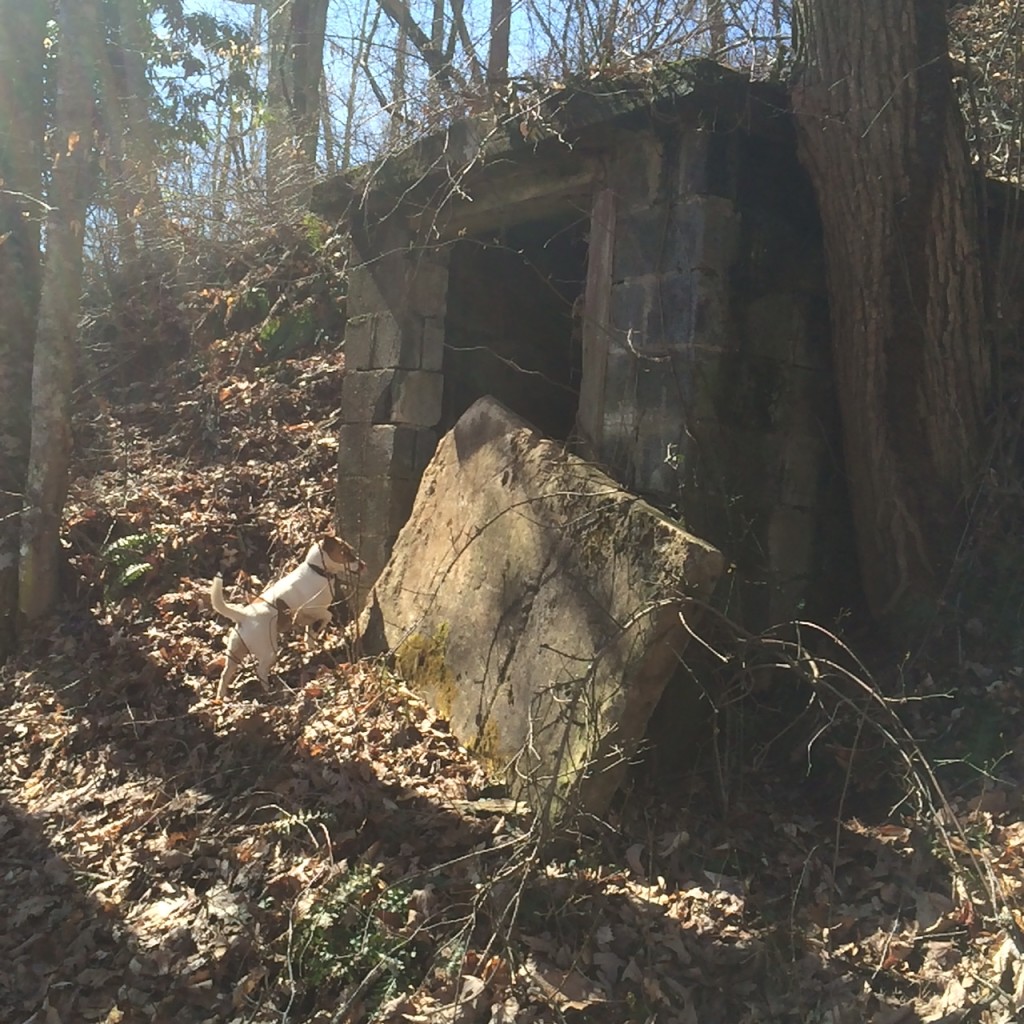
I woke up this morning with this thought: I am sleeping over The Open Door. Yes, I’m staying at the Abbey, after all, near the old stables (and this picture.) Outside, it doesn’t even really look that much different from Talbot’s day, except for the cars parked out front. In fact the whole town is like that, from another time, but with ease. It’s not strange, just gorgeous.
I got the full tour when I arrived yesterday, including all four streets in the village. There are several nice pubs, and a surprising number of decent-seeming places to eat, I guess to support all the tourists. Not only does Lacock Abbey draw the history buffs and Anglophiles, but a whole new generation of Harry Potter freaks, since many big scenes from the movies were shot here. Apparently, whole tour buses of kids with capes and wands descend on the village from time to time, but probably not during rainy April. It’s busy even now though, enough so that the Museum staff and locals have begun avoiding the Red Lion pub across the street in favor of the Bell up the road, where we had lunch. I’m going to get fat on sausage rolls and battered cod.
I went through the Museum here, too, and saw the inside of the Abbey. Of course, I saw the famous Oriel Window and Talbot’s library and apparati. Once again, I have been bodily thrown into the past… There are too many spots that I recognize from the History, too many obvious ghosts wandering around. What would the man have thought of us now, reviving his old ways in his old house?
I’ll be working out of a converted room in a barn next door, the only 13th-century darkroom I’ve ever been in. It’s perfect, and got me psyched to start right away, iodizing paper for tests tomorrow morning. I saw a tell-tale purple iodine stain on the paper as it washed, and this is a good sign for the chemistry working the way it should. By the time the sheets were out and hanging to dry, I’d had a scotch and dinner at the Red Lion, and was feeling wonderful. Sleep came fast but fitful, perhaps from the distinct sensation of wisps and shadows in the room.
Today was fantastic, despite the chaotic weather. The sun was out early, but everything was wet, and within an hour there’d be sunshowers, heavy downpours, and blue skies. But I had the whole day to work on getting things ready for class, and making sure my new batches of paper would work ok. I could get chunks of clear skies in which to shoot, and plenty of rain to try to work around. I’m sure we’ll be dealing with both extremes all week. I just had to guess wildly on exposures, ready to jump or cover if the weather shifted. It could happen within 30 seconds. Often, it did.
I was pleased to find that my paper worked well, and I shifted from my Troubleshooting Panic Mode to smaller tests and experiments: Would this loose cotton create more spots than do cotton balls during Gallic Acid development? Does a stronger solution of Gallic withstand a stronger Sodium Thiosulfate bath, even without an alkali buffer? Can I reverse the tones of a developed calotype to make an instant direct positive? (Almost…)
With this rainy weather I wanted to see how long I might have before I needed to shoot my wet negative without getting any exposure change, so I sensitized a sheet, packed up my camera and plate back and tripod and umbrella, and walked down to Talbot’s grave, at the end of the Village road. This was a 30-second exposure (at f8) in pouring rain, with a leisurely 15-minute stroll between coating and developing:

At this point, I am just so excited for the next four days of class… Bring it on, Rain Gods!
comment [1]


26 April 2012
to Lacock
I’m on my way to Lacock Abbey and I’m worried – the omens aren’t good. I was testing some of my new papers before I left Brooklyn, and had all sorts of strange chemical problems, which I’m hoping will just sort themselves out. The last two Calotype workshops went fine, but it’s a notoriously finicky process. What’s more, the rain in London has been heavy and constant and my spirits are suitably damp. I did expect it, having checked the weather before I left: days and days of constant gloom. The 10-day forecast looked like a fucking gray card.
Photographically speaking, this will be horrible for my class. We want to be shooting on the grounds, outdoors, around the village even. It’s not impossible – we’ll have to do eight-minute exposures instead of one – but it will certainly be uncomfortable, and could cause all kinds of other problems (weird tap water, papers not drying well…) We absolutely need some sun – or at least one dry day – for salt printing next week. We may get none.
Yes I’m worried, but I have to laugh when I remember reading about Talbot’s “dreadful summer” of 1839, when he was desperately trying to get his invention out before the French showed theirs. Despite the bad weather that summer, he managed to eke out enough photogenic drawings to make history, and a year later was working on his improvements with the Calotype. For all my worries about this difficult process, one all-too-obvious fact remains: It’s been done here before… Maybe I can do it here too.
Anyone know what the weather was in May of 1840?


20 April 2012
deadline
I’m jurying a portfolio showcase at the Kat Kiernan Gallery, and the deadline is approaching fast… next Thursday, April 26th. I don’t usually do these kinds of calls, but I will for nice people! My man Christopher James has been a juror before, as have people like Sean Kernan and Brie Castell whom I just met in Asheville this week. (Ill be showing there in June.) That’s all sorts of nice people right there! Plus, Lexington is really cool.
Let the little world spin…


11 April 2012
the sense of an ending
I’ve always been deeply saddened by novels and biographies that sum up a whole life, as if no matter what we do our entire selves can be reduced to a few hundred pages, and duly forgotten. Tony, the protagonist of Julian Barnes’ Booker-prize-winning The Sense of an Ending, is exactly the forgettable type: a “peaceable” man, trudging through a mediocre though not unpleasant life. “I rarely ended up fantasising a markedly different life from the one that has been mine,” he says. “I don’t think this is complacency; it’s more likely a lack of imagination, or ambition or something.”
The life of this simple Everyman might not make for much of a read, but Barnes’ treatment of the way Tony lived is beautifully described and more than a little moving. Tony, it turns out, has a particularly vague inclination to profundity, always mentioning or quoting others’ Deep Thoughts (as if they weren’t his own.) “Someone once said…” he says, and “Who was it that said…?” and “So I’ve been told.” He’s a man trying to understand Time with only blunted borrowed tools and a few leftover clichés, but also a rather sensitive heart. When Tony is confronted with new facts about his past he struggles to fit them into what he knows of himself now, uncomfortable as that might be. Mostly, he fails.
I’ve written my own blunt thoughts about Time before, being as it is one of the main obsessions of my artwork, especially in how the past as we experience it seems in fact to be ever-changing, altering what we know of our present and how we might understand our future. This is, of course, Faulkner again, and even Santayana and Einstein and probably every contemporary critic of the History of Photography… But for me the idea that we still have some access to a past we might have once assumed was dead is still a powerful thing. Looking back on our own lives we must ask ourselves, “What do I know of what happened? What do I not know?” Unfortunately, these kind of thoughts can lead to a desire for one’s own summing up, leading, if one is not careful, to a kind of Time Panic that can be unshakeable for nights….
Barnes’ book turned out to be the perfect read for a ride back to Boston a couple of weeks ago, where I once lived my own unremarkable life. My old friend Eastie had written the week before to warn me that the old pool we used to skate was going to be filled in, reducing the gloriously rideable 12’ bowl to a safer and skate-free depth of 6’. The Cambridge Pool – the C-Bowl – had been ridden by hardy East Coast freaks since the ’70’s and now it would be gone. I just had to go up for one last run.
Finding our past suddenly back in our presence isn’t often a pleasant experience: a former love has changed – she tells us how old we’ve become; the old shoes don’t fit; that café we loved isn’t so great after all… There’s an inherent conflict between the hard effects of Time and the stubborn image of our ever-youthful selves. But perhaps more strange is confronting the things that don’t change much – the architecture of our childhood, the buildings now tiny & unfamiliar to our present elevated vantage point. Oddly enough, the Cambridge Pool was both to me now – still big and imposing but at the same time reduced in scale like the rest of my childhood Wonderland. It had aged, too: painted white now, not blue, and showing more wrinkles, kinks and cracks than I do. Of course, I am no longer the skater I used to be, twenty years later, but damned if I wasn’t going to ride around a little bit. I’d get in a half hour, maybe, hoping not to break a bone, then take a few pictures and leave it all behind. But no, I skated for three hours, drawing on some hidden reserves, powered by the desire to remember how to ride it. I needed to find the old lines with my legs and body, not my memory. I had forgotten about jumping the fence, the constant nervous watching for cops, the unshaded heat, the snake sessions (though I think I was more snaker than snakee…) My body had certainly forgotten the topology of the old space, but eventually, it remembered a little. I knew I’d pay for it later, but I could have remembered for a few hours more…

The visceral sense of staring at the past is, of course, a big part of what makes Photography so powerful to me. It’s in the wonder and mystery of any old found photo; it’s in the uncanny feeling you get when you see your own 5th birthday party. It’s also there in the strange collapse you feel when your 40-something legs recall their 20-something motions. I know I had a rare chance to step into my own past this time, and to feel it bodily – a connection so much stronger than to the ghosts of immaterial images, even the ones right before our eyes. Maybe if I’m lucky the past won’t be bulldozed – just filled in a little, and flattened. But in my body I’ll know what’s under there.
comment [1]